Learn the Method
Book + Free Manual Planning Worksheet
Learn the step-by-step method and build your plan by hand.
Explore the BookFree 5-Minute Assessment
Discover whether your money is supporting what matters most with this free 5-Minute Financial Clarity Check™.
We’ll email you a link to download the assessment.
Watch how a family builds a financial plan, uses the FOM Balance Test to make intentional adjustments, and protects money for future savings goals.
A practical household financial planning method
The Fruitful Orchard Method™ helps you turn your values into a household financial plan. Start with your Why, choose the goals you want to fund, and use the FOM Balance Test to see whether your priorities fit your income. If they don’t, the test shows the gap, and your Why helps you decide what needs to change. Then FOM guides you to protect the plan by separating funds and to prepare a Continuity Plan for the future.
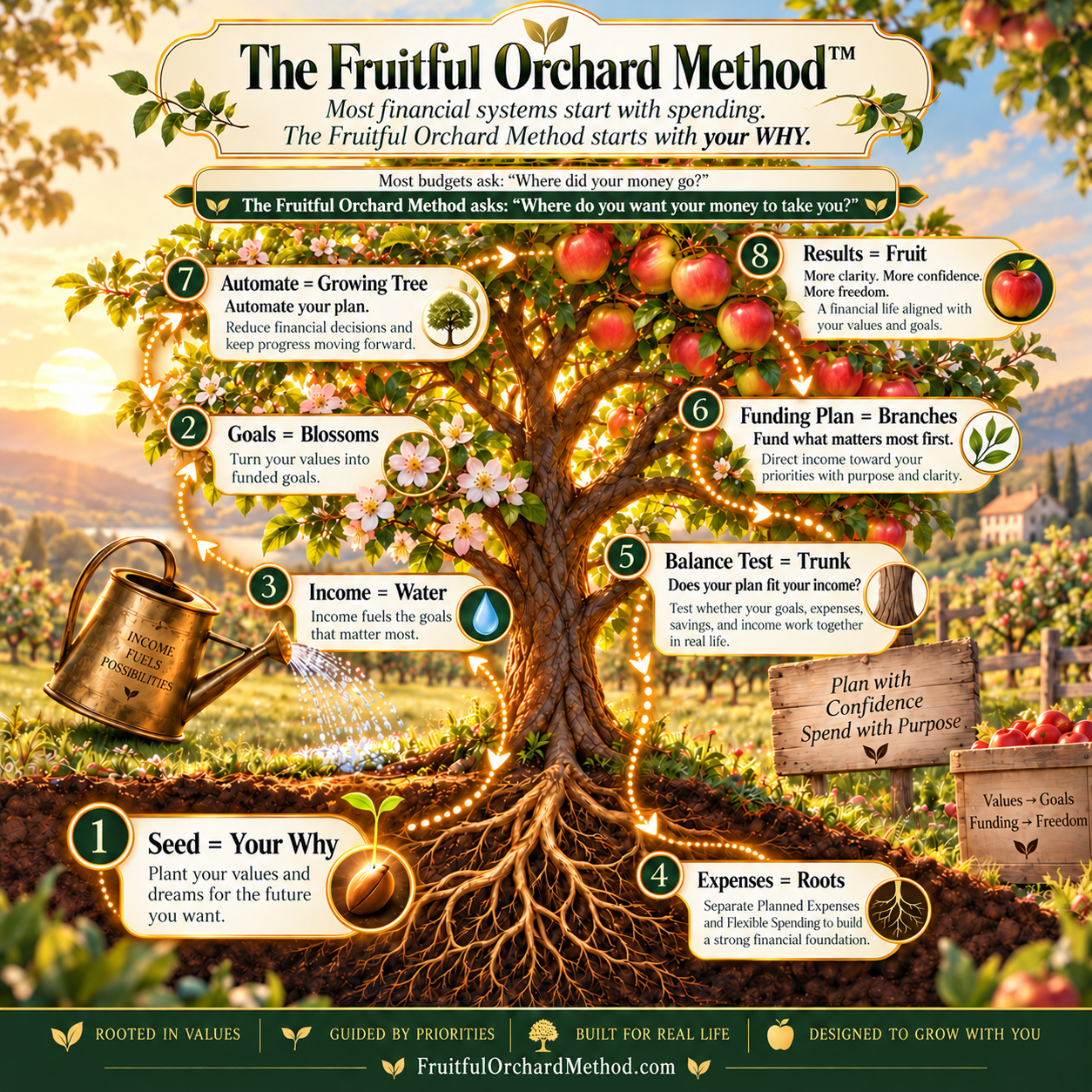
In just a few minutes, identify what is working in your plan—and what may need more structure.
Explore the Fruitful Orchard Method Digital System
A clearer way to make financial decisions
The Fruitful Orchard Method™ organizes your income, expenses, savings, and goals into one clear financial plan so you can make confident decisions based on what matters most to you.
Start with a clear look at your plan
Living paycheck to paycheck is not a personal failure. Sometimes income is too tight. Sometimes it is hard to see what each paycheck must cover, which expenses are coming later in the year, or how much is available for flexible spending.
The free Financial Plan Assessment helps you notice what is working, where there may be gaps, and what you may want to strengthen. It is not a test, and there is no perfect score.
Your answers are for you. The goal is not judgment—it is clarity.
Prefer a guided workbook?
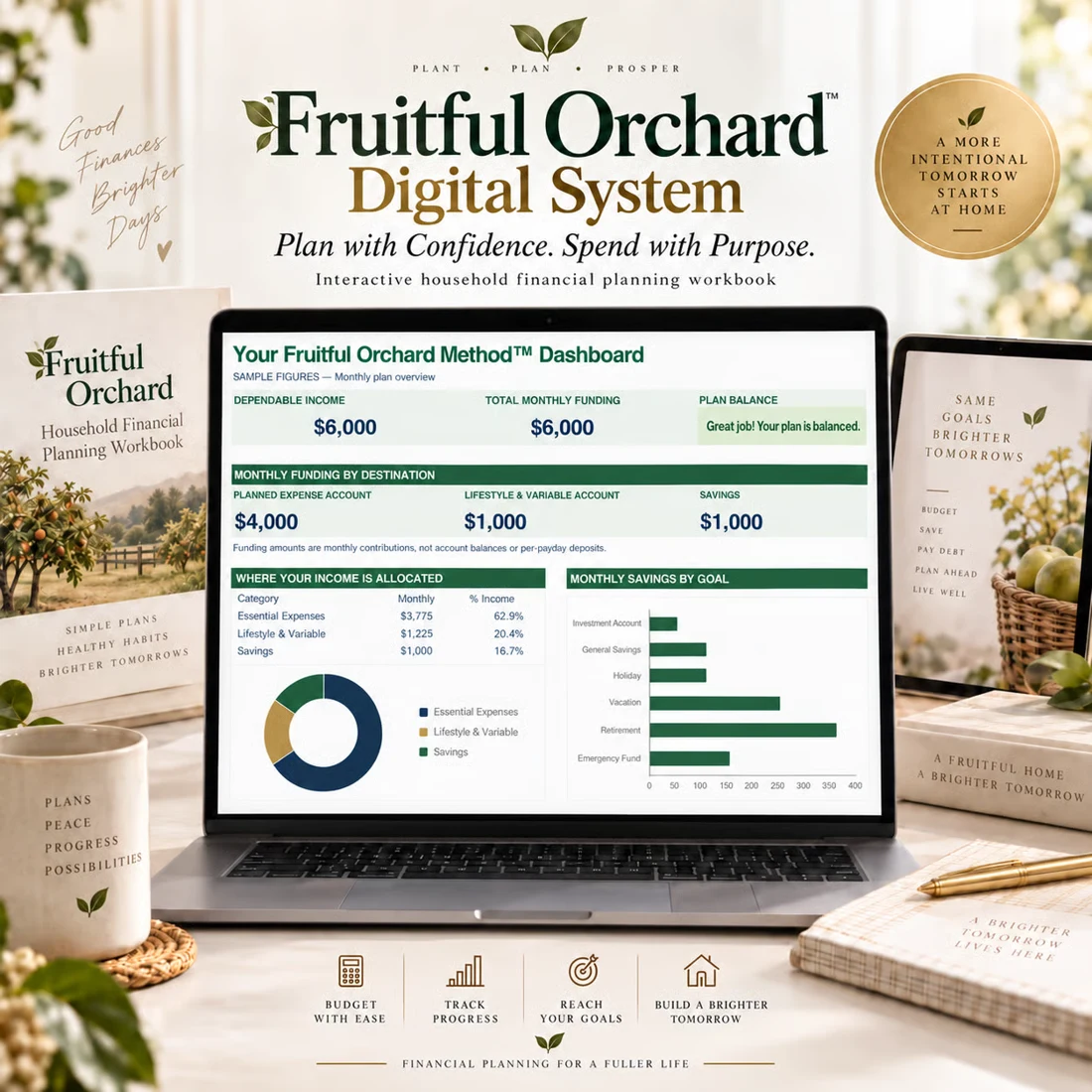
Available in Excel or Google Sheets, with automatic calculations, a Balance Test, savings tools, and planning across the year.
Turn a wall of numbers into a clear financial picture.
See how your income, expenses, and savings fit together—so you can make confident choices based on your values and goals.
$19.99 USD
View the Digital System on PayhipQuestions or trouble getting started? Message me directly. I’ll help you access your files and understand how to get started with the system.
A practical household financial planning method
The Fruitful Orchard Method begins with dependable take-home income, not gross pay or an unrealistic budget rule. It helps you account for what your household spends across the year, build savings into the plan, and separate planned money from flexible spending.
Begin with dependable income after regular deductions. Convert each source into a monthly average for one clear starting point.
Record what you spend across a full year, including monthly bills and costs that happen only once or a few times a year.
Convert annual expenses into monthly averages so irregular costs can be planned for before they arrive.
Planned Expenses are funded before everyday spending and paid from a Planned Expense Account. Flexible Expenses are everyday costs that may be adjusted, such as groceries, fuel, clothing, dining out, and entertainment.
Choose an adjustment rate that reflects rising costs and your household’s changing reality. The method applies it to planned and flexible monthly totals.
Choose goals that matter to you, such as emergency savings, retirement, a future purchase, education, travel, or debt payoff, and decide how much to fund each month.
Check that your income can fund planned expenses, flexible expenses, and savings goals. If the plan is underfunded, revise it. If it is overfunded, assign the remaining income a purpose and test the balance again.
After balancing the plan, separate and protect funding for each purpose: transfer Planned Expense funding to a Planned Expense Account, keep savings goal funding in the savings account or accounts you choose, and set aside Flexible Expense funding in a separate Flexible Spending Account for everyday costs.
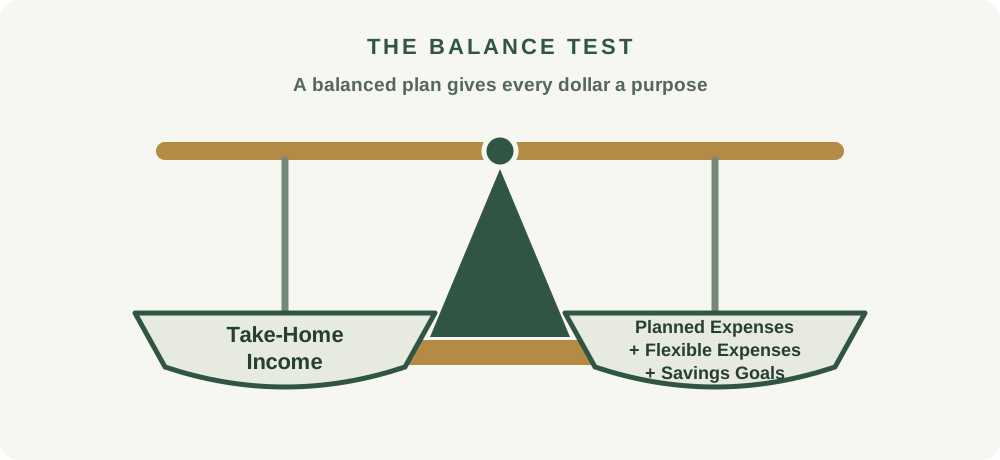
If the numbers do not balance, revise the plan before putting it into motion.
When money for Planned Expenses is moved to a separate account, it is no longer sitting in the account used for everyday flexible spending.
A clear funding routine
It is a separate account used only for expenses you have already included in your plan. You transfer planned funding into it and pay those planned costs from one clear source.
A Planned Expense Account is an organizational tool. It does not guarantee that every expense will be affordable, and it does not replace reviewing account terms, balances, transfer timing, or potential fees.
Created from 30 years of household use
I created the Fruitful Orchard Method more than 30 years ago for my own household. I used it to understand take-home income, account for expenses across the year, set savings goals, and separate money needed for planned expenses from money available for flexible spending.
After retiring, I organized the method into a book, a Manual Planning Worksheet, a Digital System, and free resources so others can create a practical household plan of their own.
Created by Jim Cook
Developed from 30 years of personal household use and organized into a practical method for others.
Author of The Fruitful Orchard Method: A Practical Guide to Household Financial Planning
Learn more about the book and its authorThe digital system
The Fruitful Orchard Method Digital System puts the same core method into a guided workbook available in Excel or Google Sheets. It handles calculations and helps you review your plan, savings goals, debt priorities, and decisions. You enter your own figures; no bank connection is required.
This example uses fictional figures to show how the Fruitful Orchard Method turns take-home income and expenses into a practical monthly funding plan.
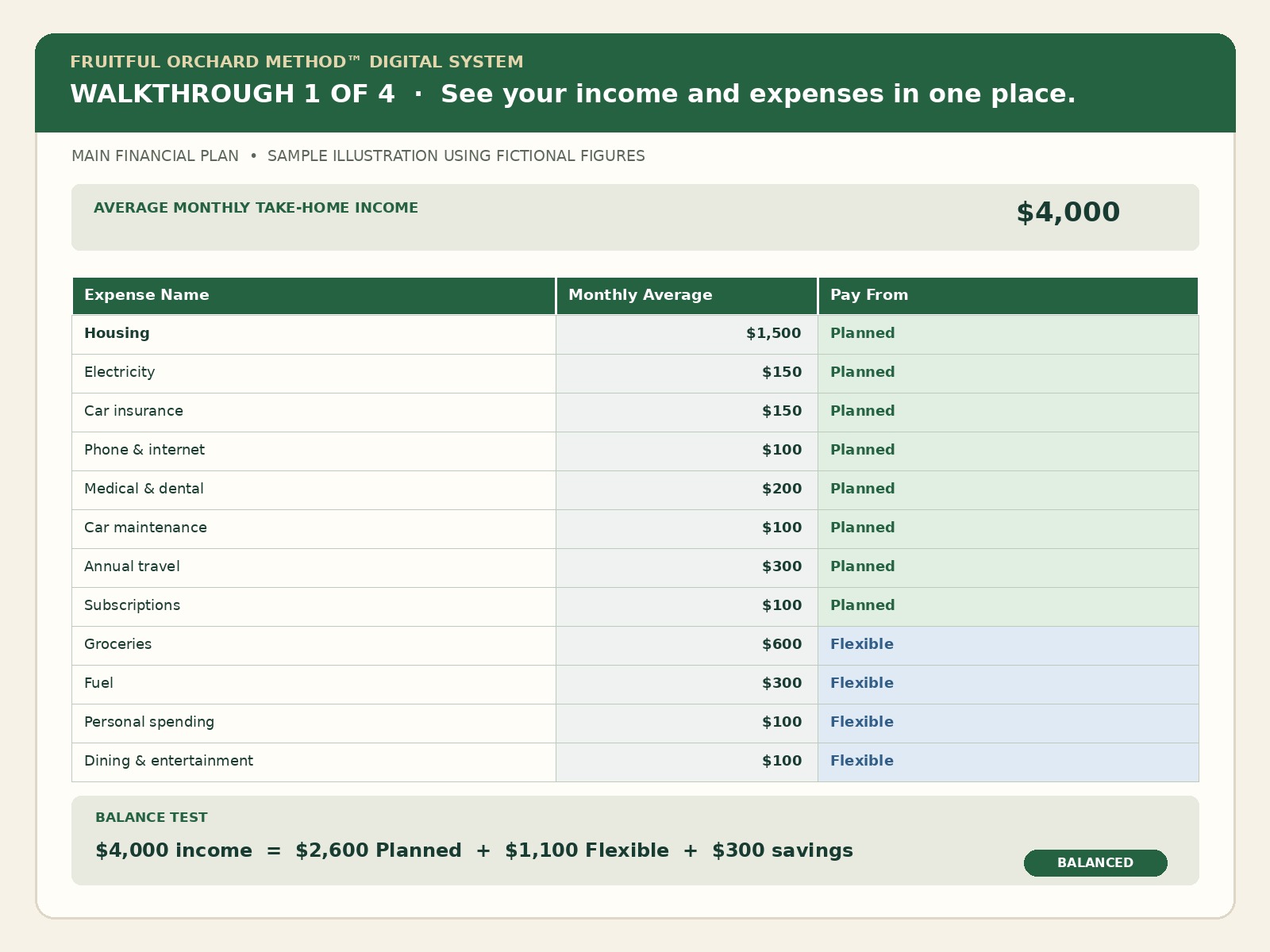
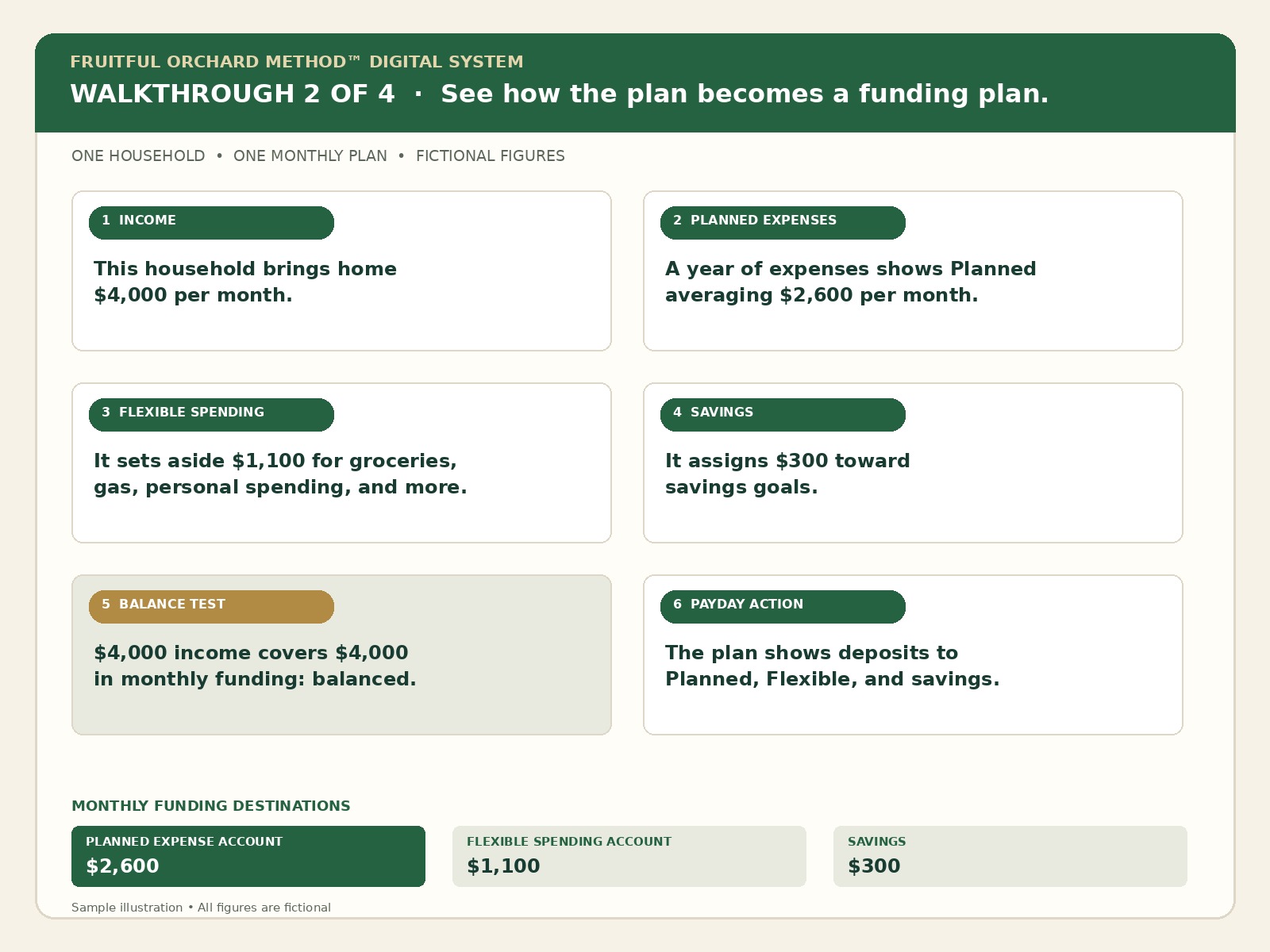
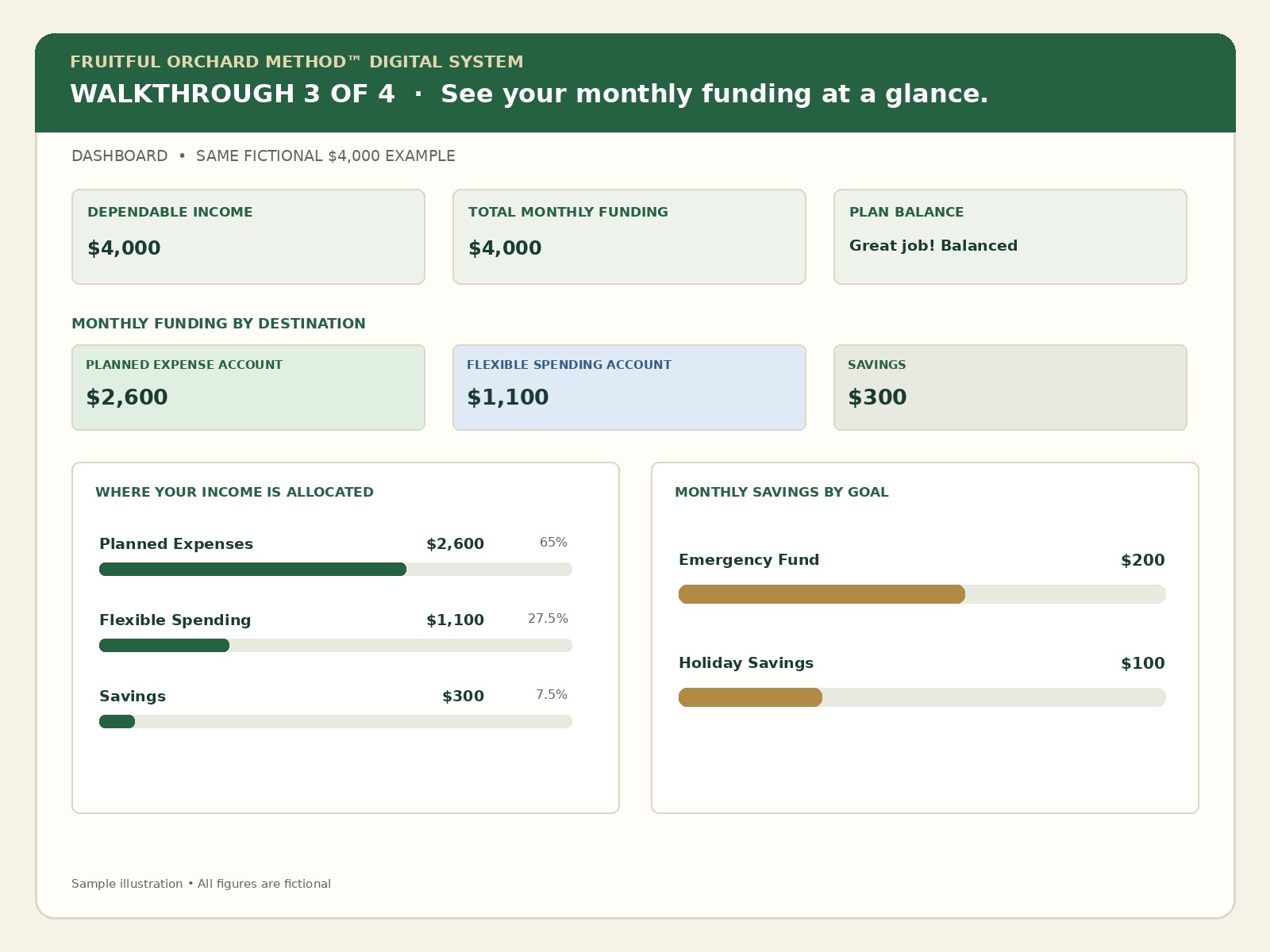
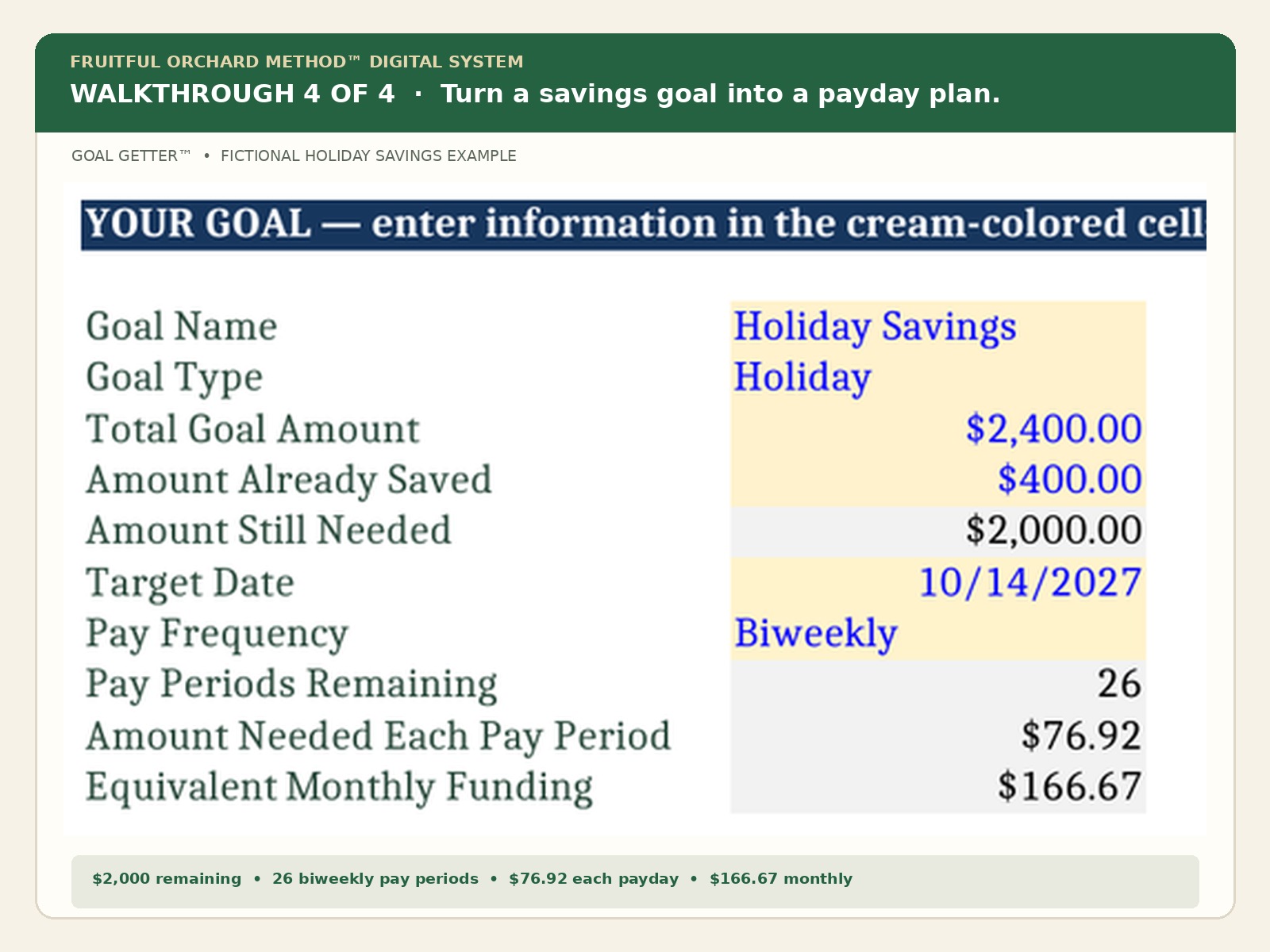
The Digital System helps you organize your own income, expenses, savings goals, and account funding—so you can see whether your plan is balanced before the month begins.
Get the Digital System on Payhip — $19.99Price: $19.99 USD. Available in Excel or Google Sheets.
Learn the complete method
The book walks you through the decisions behind a household plan. It includes access to the free Manual Planning Worksheet, with an expense inventory, reality adjustment, savings plan, Balance Test, account setup page, deposit instructions, and Planned Expense Cards.
The Digital System is an optional way to apply the method with automated calculations. Choose the format that works for you.
Explore the Book by Jim CookChoose ebook or paperbackGet the Ebook on PayhipStart where you are
The Fruitful Orchard Method may be right for you if you are tired of running short before payday, want to know where your money needs to go before you spend it, or have annual expenses that keep becoming surprises. It may also be a good fit if you know you should be saving more, are not satisfied with your current plan, or do not have one yet.
Use it on your own, as a renter, with a partner, or at any stage of life. Parents can also pass along experience while helping a young adult make the plan their own.
Learn the Method
Learn the step-by-step method and build your plan by hand.
Explore the BookAutomate the Plan
Use the guided workbook in Excel or Google Sheets for automatic calculations, comparisons, tracking, and planning tools.
Explore the Digital SystemThe book guides you through the planning decisions. The free worksheet gives you room to record dependable income, expenses, savings goals, the funding plan, and your balance test. It follows the plan-building sequence in the first planning section of the Digital System and guides you through completing the calculations by hand. The optional digital system automates calculations and helps you maintain the plan.
Build your plan by hand as you work through the book. No bank connection is needed.
The Fruitful Orchard Method provides educational tools and organizational guidance for household financial planning. It is not individualized financial, investment, legal, tax, credit, or debt-settlement advice. Your results depend on your income, expenses, debt obligations, goals, decisions, and changing circumstances. If you need advice specific to your situation, consider consulting a qualified financial, tax, legal, or credit professional.
No. You enter your own figures. The workbook helps calculate and organize the plan without accessing your bank accounts. Review and update your figures once a year, or sooner if your income, expenses, or goals change.
Yes. The Digital System is available in Google Sheets. You can also learn the method through the book and use the manual planning worksheet included with book purchase. You perform the worksheet calculations yourself.
No. The book explains the method and provides access to the manual planning worksheet. The Digital System is a separate option for applying the approach with automatic calculations and additional financial tools.
No. You can use the method on your own, as a renter, with a partner, or with family members. Your plan reflects your income, expenses, and goals.
Use the “Enter Code From Book To Receive Worksheet” button above and enter the code printed in your book.
Start with clarity
Take control of every paycheck. Build peace of mind with a plan that reflects your life.
Take the Free Financial Plan Assessment